Why Trade Show Exhibit Design Fails, And How Strategic Discovery Fixes It
A new exhibit space can look impressive and still fail. It can feature beautiful graphics, bright screens, dramatic lighting, and a bold footprint, yet leave the team asking the same question post-show: “Why didn’t it perform?”
The issue often starts before design even begins. Too many exhibit decisions are made around what's trendy, what competitors are doing, or what worked three shows ago. Those inputs matter, but they do not define value. Real value comes from knowing what the exhibit must accomplish, who the target audience is, and what action we want them to take.
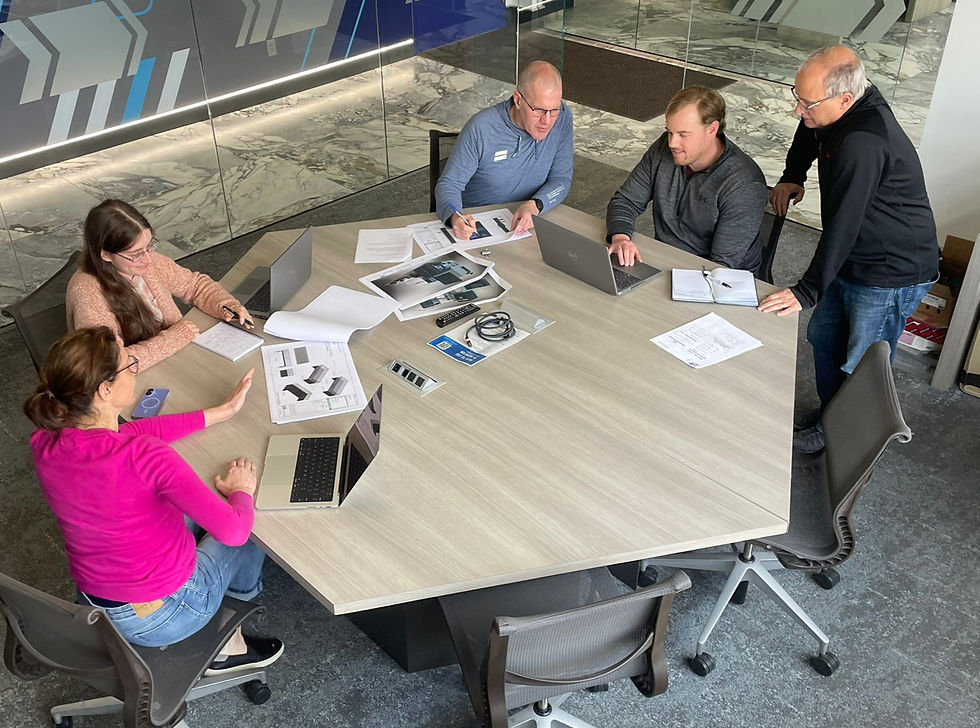
At RES, discovery isn't a formality before sketches and renderings, it’s where the exhibit defines its purpose. It's how we establish the objective, the target visitor, the desired behavior, and the operational realities that shape the final experience. With custom trade show booth design and fabrication, clear purpose gives every future decision a standard: without it, every idea sounds feasible; with it, the right ideas become obvious.

Why Must Exhibit Strategy Start with 'The Why' Instead of Booth Size?
Trade show exhibits are usually judged by visible features: booth square footage, foot traffic, screen density, interactive activations, and product displays. While those elements may be exactly what a space needs, they are tactical execution tools, not starting points.
A strong discovery process begins with three fundamental questions:
Who is this for?
What business result do we need?
What specific action should the experience prompt?
These questions shift the conversation away from aesthetic preferences and toward commercial purpose. If the goal is attracting first-time prospects, the exhibit requires high visibility, rapid messaging, and a low-friction path into conversation. If the goal is supporting high-value sales negotiations, the footprint may need privacy, and comfortable hospitality.
The same square footage can serve entirely different outcomes. Design shouldn't start with floor space alone; it starts with intent.
Audience comes first
Attendees are constantly scanning, comparing, and deciding where to spend their limited time. Some don't know your brand yet; others know the company but not your newest offering; others are existing clients ready for deeper discussions.
A strategic design process identifies the core audience and addresses their immediate context on the show floor:
What problem are they trying to solve?
How much time will they realistically commit?
What visuals or messaging will make them stop?
What will prompt them to take the next step?
This separates value from noise. A feature is only valuable if it moves the right visitor toward the right action. A large LED wall helps if it quickly clarifies a complex product but distracts if it generates noise without message clarity. A lounge builds value if relationship-building is the primary objective but wastes square footage if the priority is high-volume product demos.
The Business Objective Drives the Layout
An exhibit is not just a physical environment. It is a business tool.
An exhibit is a commercial tool, which means the objective must be far more explicit than "making an impact." Clear business goals sound like:
Increase qualified discovery conversations with a specific buyer persona.
Introduce a new platform so visitors understand its core value proposition in under 30 seconds.
Improve post-show lead conversion by capturing richer contextual data during booth interactions.
Clear objectives guide what to build, but more importantly, they clarify what not to do. The discipline of discovery is identifying which ideas serve the ultimate goal and which ones merely add cost, friction, or complexity.

Shape the experience around the journey
Once strategy is locked, the focus shifts to spatial execution. An exhibit is not a static installation; it is an active physical journey. Visitors approach, enter, navigate, interact, and leave with a lasting impression. Every touchpoint should feel intentional and friction-free for both the attendee and the booth staff.
At RES, shaping the trade show exhibit design experience means defining four distinct layers:
What people see
Visibility must lead somewhere. The initial sightline needs to answer a visitor’s immediate question: “Is this relevant to me?”
Using clear visual hierarchy, the primary brand identity is recognizable from the aisle, supporting solutions appear at the perimeter, and deep product details exist within the booth interior.
Trying to say everything at once forces visitors to work too hard, and most will simply keep walking.
What people feel
Physical environments directly influence human behavior. A cramped layout creates pressure, a confusing footprint causes hesitation, and a well-proportioned space makes visitors feel invited and in control.
How people feel isn't just window dressing, it’s how they choose to pay attention. A high-energy launch calls for movement and dynamic lighting, while a technical consultation area requires calm, focus, and structural privacy.
What people understand
On the show floor, storytelling isn't a wall of body copy; it’s the logical sequence of information across the environment.
The narrative should guide visitors from a problem they recognize, to an interactive demo or solution, to a clear sales conversation. Clear spatial storytelling provides enough context to care and enough direction to engage.
What people do
Every footprint should engineer a specific action, whether that’s starting an impromptu conversation, joining a scheduled demo, exploring a physical display, or stepping into a private conference room.
When discovery conversations are the priority, staff stations must be positioned where aisle engagement happens naturally, rather than behind reception counters.
How Does Structural Engineering Protect Trade Show Exhibit ROI?
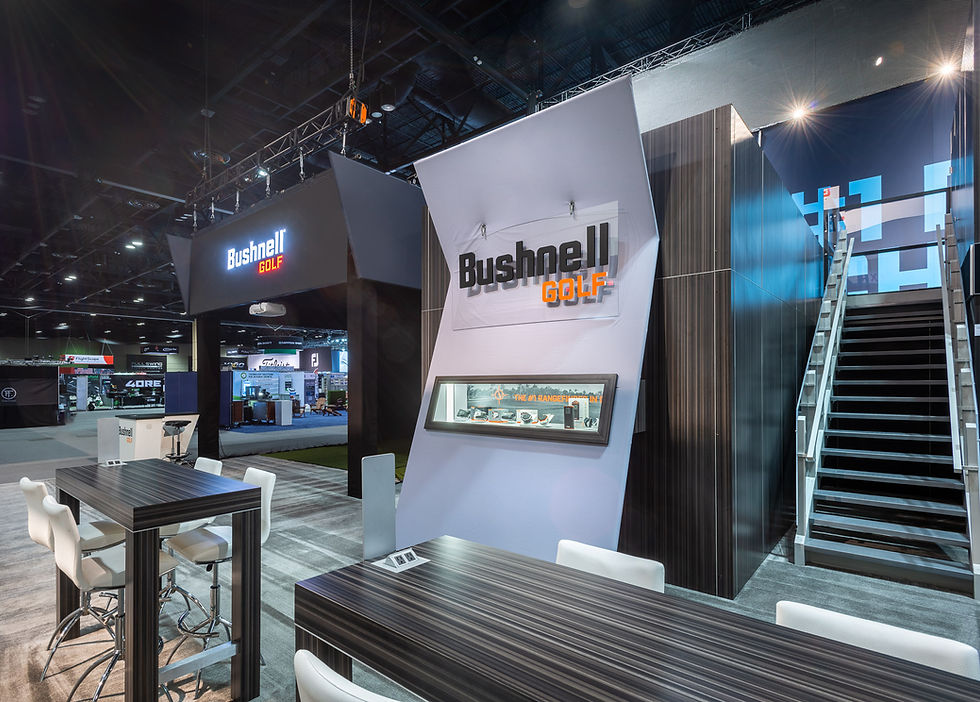
The most compelling design breaks down if structure, materials, integration, modularity, shipping, or show-site assembly are not resolved early in the process.
At RES, our engineering and production teams bridge the gap between vision and reality. Their role isn't to restrict creative ambition, it's to ensure high-impact concepts translate seamlessly from paper to the real world.
Every structural choice must answer three practical operational questions: Can it be built safely? Can it stay within budget? Can it be deployed repeatedly across a multi-show calendar?
Materials Impact Value: Surface finishes affect weight, durability, crate packing, and repair costs. High-touch demo zones require resilient finishes that withstand continuous use, while modular traveling assets need lightweight, scratch-resistant materials.
Modularity Protects ROI: Components that can be reconfigured, resized, or repurposed allow exhibit programs to adapt across varying booth sizes and regional events, maximizing long-term capital investment.
Logistics Dictate Efficiency: Smart structural engineering accounts for drayage, crate counts, labor hours, and show-site dismantle constraints long before components hit the shop floor.
Build alignment before design gets expensive
Exhibit planning can easily devolve into a debate over personal preferences, marketing wants bigger graphics, sales wants more meeting rooms, and leadership wants an overhead hanging sign.
Early discovery establishes an objective benchmark that unifies internal stakeholders. When the team agrees on the target audience, business objective, and required visitor action, choices become practical rather than political. The conversation naturally shifts from "I prefer this" to "This supports our goal."
When every decision has a clear reason, the exhibit becomes easier to design, easier to build, and far more likely to produce the result it was built to achieve.

Ready to Elevate Your Experience?
Explore how the RES Exhibit Service team can transform your custom trade show booth design and fabrication journey. We’re here to answer your questions and provide personalized insights tailored to your needs.
Click the link below to learn more about our exhibitor program management process.
Your first step towards Engineered Wonder is just a click away!