Measuring Trade Show Impact
How Data Justifies Exhibit Spend and Boosts Brand Exposure
A trade show footprint is usually one of the biggest line items in a marketing budget. Between space rental, exhibit fabrication, shipping, labor, travel, and show services, costs add up fast. For most brands, the investment is still worth it. The real challenge is proving it to leadership after the show closes.
That proof can't just be a crowded booth photo and an Excel sheet of badge scans. Foot traffic is great, but management wants to know what those visits actually created. Did the booth drive sales? Did you reach the right people? Did the setup give your team the right space to close deals?
The answer comes down to tracking the right numbers from the start. When you combine smart booth design with simple, intentional tracking, you stop guessing whether the show worked and start knowing exactly where to invest next time.

Trade show value has always been tied to concentrated attention
Trade shows remain powerful because they compress a lot of activity into a short window. In a single week, a brand can create thousands of impressions, host product discussions, and start conversations with prospects that may be hard to reach through normal channels.
For some companies, that level of audience exposure is hard to replace. A strong show can put the brand in front of buyers, media, distributors, and competitors at the same time. It can also create urgency. People walking the floor are actively comparing options, asking questions, and looking for solutions.
That concentration is the reason many brands continue to fund large exhibits. The question is not whether trade shows can create opportunity. The question is whether each event creates enough qualified opportunity to justify the cost.
That is where measuring trade show Impact changes the conversation.
Data turns exhibit spend from a cost into a business discussion
Without clear data, event results often get explained through opinion. The booth felt busy. The team had good conversations. The location seemed better than last year. These observations may be true, but they are hard to defend when budgets tighten.
Measurable data gives teams a stronger way to explain performance. It helps answer questions such as:
How many people entered the booth or engaged with a demo?
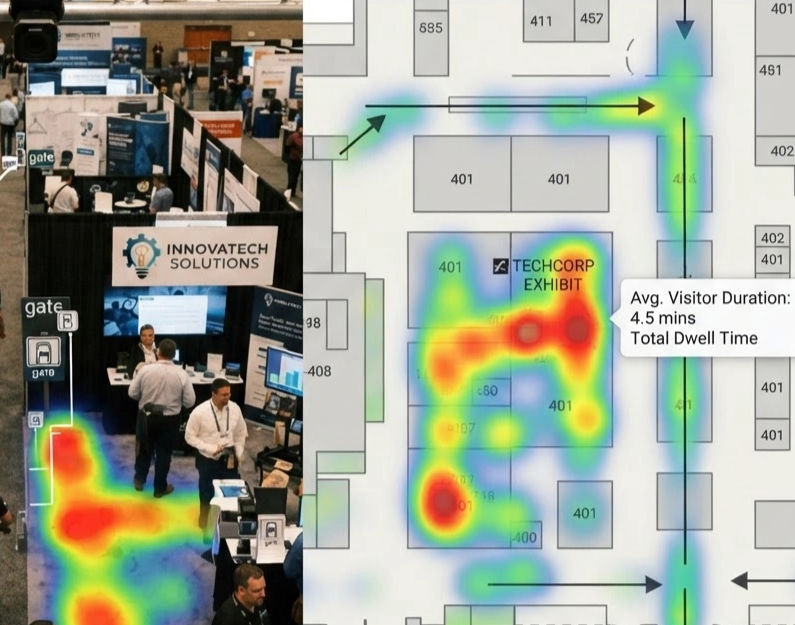
Which areas of the floorplan drew attention?
How long did visitors stay?
Which products or messages attracted the most interest?
These answers do more than support a post-show report. They help leaders compare events, adjust exhibit strategy, and decide whether a larger or smaller footprint makes sense next time.
A $500,000 trade show investment looks very different when the team can explain the audience reach, opportunities created, and the lessons learned.
Technology makes the event floor easier to understand
Modern exhibit measurement does not need to be complicated. The best systems collect useful information without disrupting the visitor experience.
Common tools like badge scanners, traffic counters, dwell-time sensors, interactive product stations, and post-event CRM tracking can showcase both volume and quality.
A traffic counter may show that 4,000 people passed through an exhibit. Badge scans may show that 600 shared contact details. CRM tracking may show which conversations moved into sales follow-up. Each layer matters. Raw traffic shows exposure. Engagement data shows interest. Qualification data shows fit. Sales data shows business impact.
The goal is not to measure everything. The goal is to measure the right things well enough to make better decisions.
The best metrics connect activity to intent
A common mistake is treating every scan as equal. Badge scans are useful, but they do not tell the full story. An attendee collecting giveaways, a competitor browsing the floor, and a ready-to-buy customer can all end up in the same lead file.
Better measurement looks at intent. That may include job role, company type, or lead qualifications. It may also include behavior inside the exhibit, such as attending a demo, asking for pricing, or writing an order.
Quality matters more than volume when the goal is return on spend.
A smaller number of strong conversations can be worth more than a large list of unqualified names. This is especially true for brands with long sales cycles or high-value products. In those cases, one meaningful discussion with the right decision maker can carry more weight than hundreds of casual scans.
Measuring trade show impact improves the next exhibit before it is built
Post-show reporting should not be a recap alone. It should be a planning tool.
If traffic data shows that one side of the booth received little attention, the next layout can change. If one product demo drew twice as many visitors as another, the team can rethink space allocation. If visitors passed right by a static display, reviewing the floorplan gives you the chance to spot those dead zones and replace them with high-traffic, guided discussion areas.
Data also helps teams evaluate staff planning. A booth may get heavy traffic during certain hours and sit quiet during others. Knowing that pattern helps schedule the right number of people at the right time. It can reduce fatigue and improve the quality of conversations.
This is one of the most practical benefits of measurement. Not only does it help justify the last event, but it also helps improve the next one.
The takeaway is better decisions, not just better reports
Face-to-face events are still unmatched for generating pipeline, but proving their return requires more than crowded aisle photos. You need clear, defensible data showing why the spend was justified, which booth zones generated qualified engagement, and what layout changes will drive higher returns next time.
Winning event strategies don't rely on instinct alone. They combine intentional design with smart tracking to turn floor-level activity into bottom-line performance.
RES builds exhibit environments equipped with tracking technology to give you full visibility into booth performance and ROI. Reach out to the RES team to explore how our customizable systems can optimize your next build for maximum impact.